
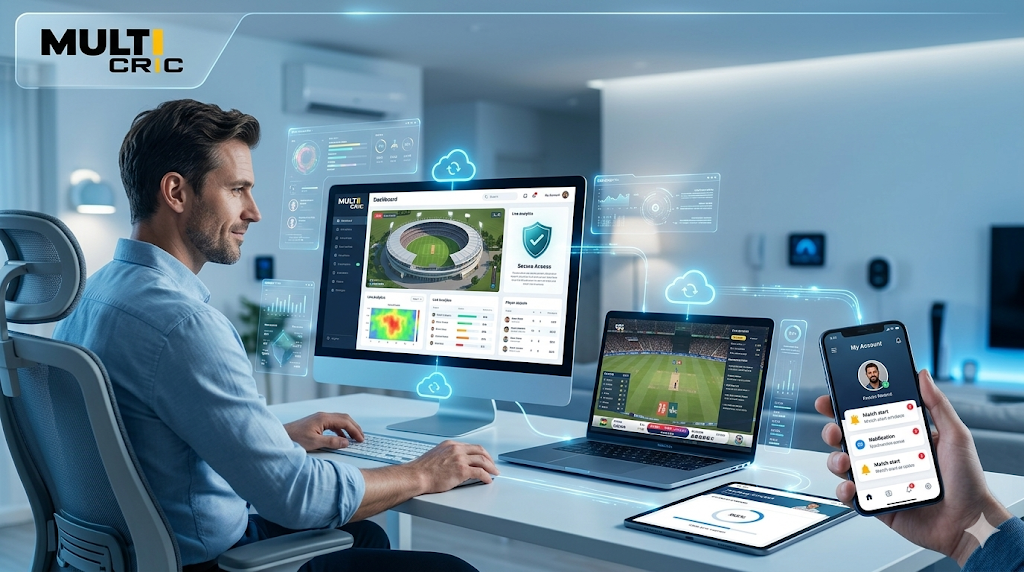
Future of Multi-Device Access in India: In today’s fast-paced digital world, users expect flexibility, speed, and seamless experiences across platforms. This is where multi-device access plays a crucial role. Whether it’s checking live cricket scores, streaming matches, or managing online activities, the ability to switch between devices has significantly enhanced user convenience. Understanding how multi-device access improves user convenience is especially important for Indian users, where mobile-first usage is rapidly growing alongside desktop and smart TV adoption.
What Is Multi-Device Access?
Multi-device access refers to the ability to use a single platform or service across multiple devices such as smartphones, tablets, laptops, and smart TVs without losing progress or functionality.
For example, a user can start watching a match on their phone during commute and continue it on a laptop at home. This flexibility defines how multi-device access improves user convenience in real-life scenarios.
Why Multi-Device Access Matters in India
India has one of the largest digital user bases, with millions relying on smartphones while also using desktops and smart TVs. With affordable internet and growing digital adoption, multi-device access in India has become a necessity rather than a luxury.
During major events like the Indian Premier League, users often switch between devices depending on their location and availability, highlighting the importance of seamless access.
Key Ways Multi-Device Access Improves User Convenience
1. Seamless User Experience
The biggest advantage of multi-device access is the ability to continue activities without interruption. Whether switching from mobile to desktop or tablet, users enjoy a consistent experience.
👉 Actionable Tip: Always log in with the same account across devices to sync your data and preferences.
2. Flexibility and Mobility
How multi-device access improves user convenience is evident in the freedom it offers. Users are no longer restricted to a single device, making it easier to stay connected anytime, anywhere.
3. Enhanced Productivity
Switching between devices allows users to perform tasks more efficiently. For instance, users may browse on mobile but complete detailed tasks on a laptop, improving productivity.
4. Personalized Experience
Modern platforms use cloud technology to store user preferences, ensuring a personalized experience across devices. This is a major benefit of multi-device access in India.
5. Better Accessibility
Multi-device compatibility ensures that users can access platforms regardless of device limitations. This inclusivity is a key factor in how multi-device access improves user convenience.
6. Real-Time Synchronization
Cloud-based syncing ensures that updates, notifications, and data are consistent across all devices. This feature enhances reliability and trust in digital platforms.
India-Specific Use Cases
In India, multi-device access is widely used across entertainment, education, and gaming platforms. For example, users may check live cricket updates on mobile during travel and switch to a smart TV for a better viewing experience at home.
During global tournaments like the ICC Cricket World Cup, this flexibility becomes even more valuable as users follow matches throughout the day on different devices.
Additionally, regional language support and device compatibility make multi-device access in India more inclusive for diverse audiences.
Advantages of Multi-Device Access
The growing adoption of multi-device access offers several benefits such as uninterrupted user experience, improved flexibility and convenience, better personalization through synced data, enhanced accessibility across devices. These advantages clearly demonstrate how multi-device access improves user convenience for Indian users.
Challenges of Multi-Device Access
While beneficial, multi-device access in India also comes with challenges like data security risks across devices, dependency on stable internet connectivity, compatibility issues with older devices, increased data consumption. Being aware of these challenges helps users make safer and smarter decisions.
Practical Tips for Indian Users
To maximize the benefits of multi-device access, consider these actionable tips: use strong passwords and enable two-factor authentication, keep your apps and devices updated, avoid logging in on shared or public devices, use trusted platforms with secure cloud syncing, monitor your account activity regularly. These practices ensure a secure and smooth experience while understanding how multi-device access improves user convenience.
Role of Technology in Multi-Device Access
Technologies like cloud computing, AI, and high-speed internet are driving the growth of multi-device access in India. These technologies enable real-time synchronization, faster performance, and better user experiences.
For Indian users, this means smoother transitions between devices and improved reliability across platforms.
The Future of Multi-Device Access in India
The future of how multi-device access improves user convenience looks promising. With advancements like 5G and smart ecosystems, users will experience even faster and more seamless connectivity.
Integration between devices—such as smartphones, smart TVs, and wearables—will further enhance multi-device access in India, making digital experiences more connected than ever.
Final Thoughts
Understanding how multi-device access improves user convenience highlights its importance in today’s digital ecosystem. It offers flexibility, efficiency, and personalization, making it an essential feature for modern platforms.
For Indian users, embracing multi-device access in India ensures a smoother, more convenient, and secure digital experience across various platforms.
FAQs About Multi-Device Access
1. What is multi-device access?
Multi-device access allows users to access the same platform across multiple devices seamlessly.
2. How does multi-device access improve convenience?
It enables flexibility, real-time syncing, and uninterrupted experiences across devices.
3. Is multi-device access safe?
Yes, if you use secure platforms and follow best security practices.
4. Why is multi-device access important in India?
It supports diverse usage patterns and enhances accessibility for users across different regions.
5. What is the future of multi-device access?
With advancements like 5G and cloud technology, how multi-device access improves user convenience will continue to evolve and improve.